What to Buy for a New Baby: The Checklist That Separates Required From Optional
Somewhere between the registry app and the "80 things you need" listicle, the actual answer got buried. Two things are genuinely required by safety standard. A handful of others earn their keep. Most of the list is noise you can skip, borrow, or buy secondhand without guilt.
Short answer: your baby needs a rear-facing car seat to leave the hospital in, and a flat sleep surface that meets current federal safety standards. That is the required list. Everything past that is a spectrum from "genuinely useful" to "someone's registry upsell."
What is actually required, by safety standard
These two are not optional, and they are not TMF's opinion — they come directly from AAP guidance and federal product-safety regulation.
- A rear-facing car seat. The AAP urges that every newborn be brought home from the hospital in a rear-facing car safety seat, and hospitals set discharge policy around it. This is the one item you genuinely cannot leave the hospital without.
- A CPSC-compliant flat sleep surface. A crib, bassinet, or play yard that meets current federal standards (16 CFR 1219 and 1220 for cribs, 16 CFR 1218 / ASTM F2194 for bassinets and cradles). The AAP's rule for what goes in it is "bare is best": a firm, flat mattress and a tight-fitting sheet, nothing else.
What genuinely helps (not required, but earns its keep)
None of these are safety-mandated, but they solve a real, repeated problem rather than sitting in a closet.
- A wearable blanket or sleep sack. The AAP prefers sleep sacks and layered sleep clothing over loose blankets, since loose bedding is a suffocation risk. If you swaddle, the AAP notes there is no evidence it reduces SIDS risk, though it can help calm some babies — and it has to stop once your baby shows signs of rolling.
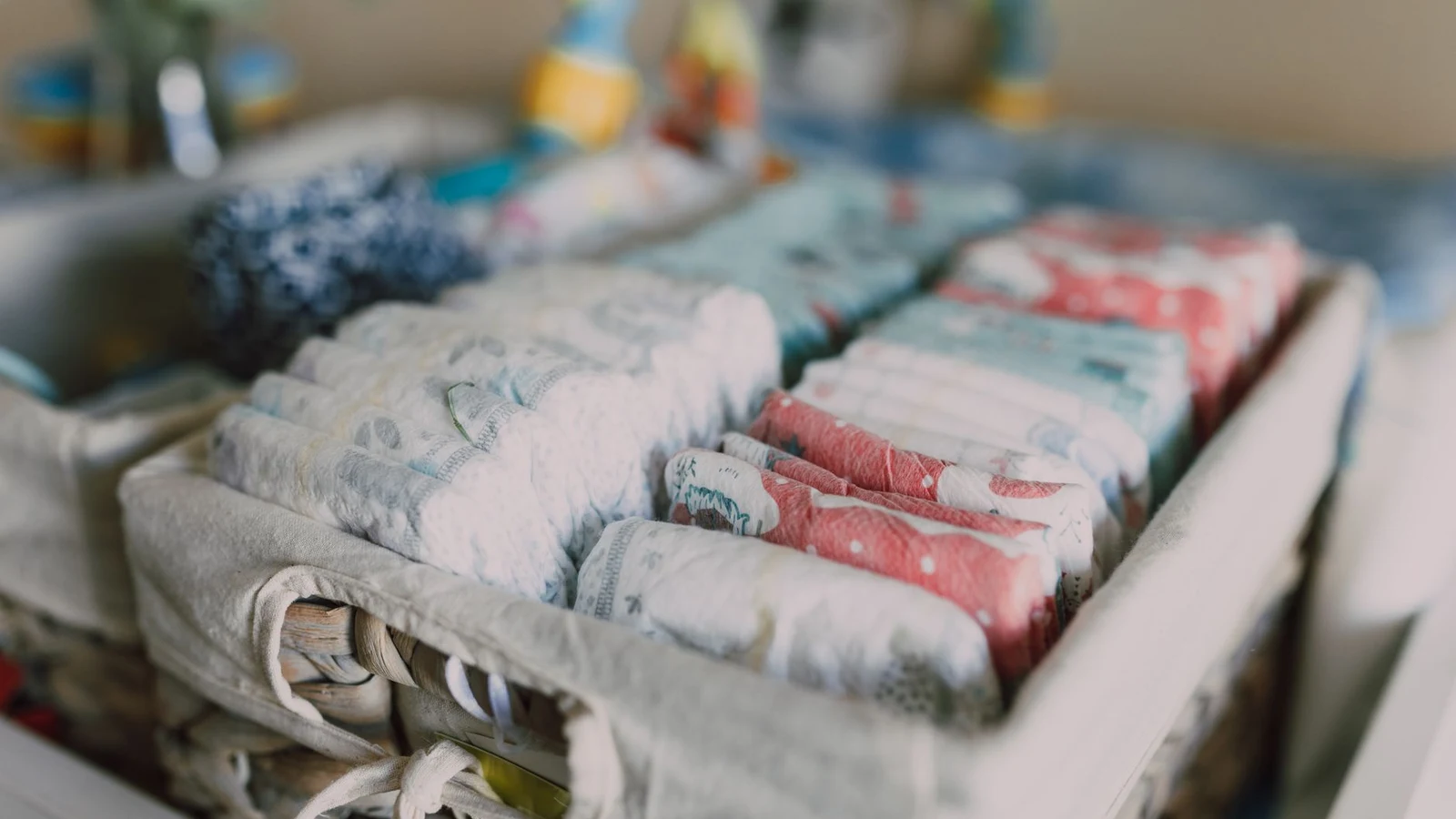
- Diapers and wipes, in bulk. Not a debatable category. Buy the smallest size in modest quantity first; newborns outgrow sizes fast and you don't want a closet of size-1 diapers on a size-2 baby.
- A few basic clothing layers. Simple, easy-on-easy-off onesies and a couple of weather-appropriate layers. You do not need a full nursery wardrobe before day one — babies grow out of newborn sizing within weeks.
- A feeding plan for the way you're actually feeding. If you're formula feeding or combination feeding, bottles and formula. If you're exclusively breastfeeding, you may not need bottles at all in week one.
What to skip, borrow, or buy secondhand without guilt
This is the part that actually saves money, and it is backed by the same safety bodies, not just thrift instinct.
- Crib bumpers, sleep positioners, and inclined sleepers. Crib bumpers are banned under the federal Safe Sleep for Babies Act. The AAP advises against sleep positioners and inclined "loungers" or "nappers" because of suffocation and airway-restriction risk. This is not a preference list — skip all three.
- Baby walkers. The AAP is direct that walkers do not help a baby learn to walk despite the marketing. Skip.
- Weighted blankets, weighted swaddles, or weighted sleepers. The AAP advises against these for infants: increased suffocation and overheating risk, no proven sleep benefit.
- Wipe warmers, elaborate nursery decor, and most "newborn must-have" gadgets. No safety body requires these, and most solve a problem you won't have until you've actually met your baby's specific habits. Wait and see before you buy.
Buying secondhand safely: two different rules
Secondhand is a real money-saver for baby gear, but car seats and cribs follow different logic than clothes and toys.
- Car seats: avoid secondhand unless you know the full history. No crash history, not expired, no open recalls, all original parts present. Most car seats are usable for six to ten years from manufacture depending on type; if you can't verify the history, buy new. This is the one category where "it looks fine" isn't good enough.
- Cribs: CPSC recommends against secondhand, and if you do, keep it under 10 years old. Confirm it meets current federal crib standards (older secondhand cribs often predate them) and has no open recall.
- Clothes, blankets for daytime use, toys, and most gear: secondhand is fine. Wash everything, check for recalls on anything mechanical, and move on.
Who can skip most of this list entirely
If this isn't your first baby, or you have access to a friend or sibling's outgrown gear, you may only need to fill genuine gaps: a new car seat if the old one is expired or unverified, and diapers in the size you actually need right now. There is no rule that says a second, third, or borrowed-gear baby needs a fresh registry.
The one-page version
Required
Rear-facing car seat. CPSC-compliant crib, bassinet, or play yard with a fitted sheet only.
Genuinely useful
Sleep sack, diapers and wipes in bulk, a few basic clothing layers, a feeding plan that matches how you're actually feeding.
Skip, or borrow/secondhand only
Crib bumpers, sleep positioners, inclined sleepers, walkers, weighted sleepwear, wipe warmers, and most single-purpose gadgets. Clothes, daytime blankets, and toys are fine secondhand; car seats and cribs need the checks above.
When to get another opinion
If you're choosing gear around a specific medical situation — reflux, prematurity, a physical condition — talk to your pediatrician before buying based on a general checklist. This page is about typical, healthy-term newborn basics, not a substitute for guidance specific to your baby.
Bottom line, in one line
Two things are required by safety standard: a rear-facing car seat and a CPSC-compliant flat sleep surface. Almost everything else on a typical registry is optional, and a meaningful chunk of it is on the official skip list.
Related reading
- Why is a bedtime routine important for a baby?, for what happens after the sleep space is set up.
- Affordable baby sleep products that actually work, if you've covered the required basics and want to know which sleep-adjacent extras are worth it.
Sources this page is built from
- HealthyChildren.org / AAP: Where We Stand — Car Seats for Children
- CPSC: Safe Sleep — Cribs and Infant Products
- HealthyChildren.org: Baby Products to Avoid — Unsafe Registry Picks and Secondhand Gear
- HealthyChildren.org: Swaddling — Is It Safe for Your Baby?
You are not doing this wrong
An overstuffed registry is not a sign you're behind. It's a sign the industry sells more than any baby needs. Two required items, a short useful list, and permission to skip the rest.
Tired Mom Finds
Practical routines that get done in real homes
Small, repeatable habits. Less spending on things you didn't need.