Quiet Time Activities for Toddlers Who Won’t Nap
Practical quiet time activities for toddlers who won’t nap, with realistic routines, simple quiet play ideas, and tips for building toddler independent play without a battle.
You are not failing bedtime. You are carrying a lot, and small consistent sleep cues really do add up.
If your toddler dropped naps early (or is in that “nap is a personal insult” phase), you are not alone. I’ve had seasons where the afternoon nap turned into 45 minutes of negotiating, followed by a cranky kid and a mom who never got a breather. Quiet time saved us. Not a perfect, silent hour where angels sing. More like: a predictable chunk of time where my toddler stays in one safe space with quiet play ideas, and I get to drink coffee while it’s still warm. Here are quiet time activities for toddlers that actually work on real-life days, plus how to set it up so your kid can handle a little toddler independent play without feeling abandoned.
What “quiet time” can look like (without expecting a miracle)
Quiet time in our house is not “you must be silent.” It’s “you stay in your room or play area and choose from the quiet bin.” Sometimes my toddler flips through books for 3 minutes and then talks to stuffed animals for 12. Sometimes they lay on the rug and stare at the ceiling (honestly relatable). The biggest shift was treating it like a routine, not a punishment. Same time, same place, same options. That predictability is what makes toddler independent play possible.
- Start small: 10 to 15 minutes is a win if your toddler is new to it
- Pick a consistent time: after lunch works well because energy dips a little
- Keep it simple: the goal is calm and contained, not Pinterest-level crafts
- Expect a warm-up period: the first week can be bumpy and that’s normal
Set up a quiet-time space that keeps you from hovering
If I leave the whole house available, my toddler will explore it like a tiny raccoon. Quiet time works best when the space is contained and boring in the best way. I like having a small basket that only comes out during quiet time. That novelty buys you a few extra minutes, and it keeps those items from being dumped out all day long. Also, fewer choices equals fewer meltdowns. I rotate a couple things every few days instead of offering everything we own.
- Choose one contained area: bedroom, playpen, or a gated living room corner
- Do a quick safety sweep: cords up, small stuff out, furniture stable
- Use a visual cue: a small basket of “quiet time only” toys helps
- Keep options limited: 4 to 6 activities is plenty (too many makes chaos)
Quiet play ideas that work for toddlers (with minimal setup)
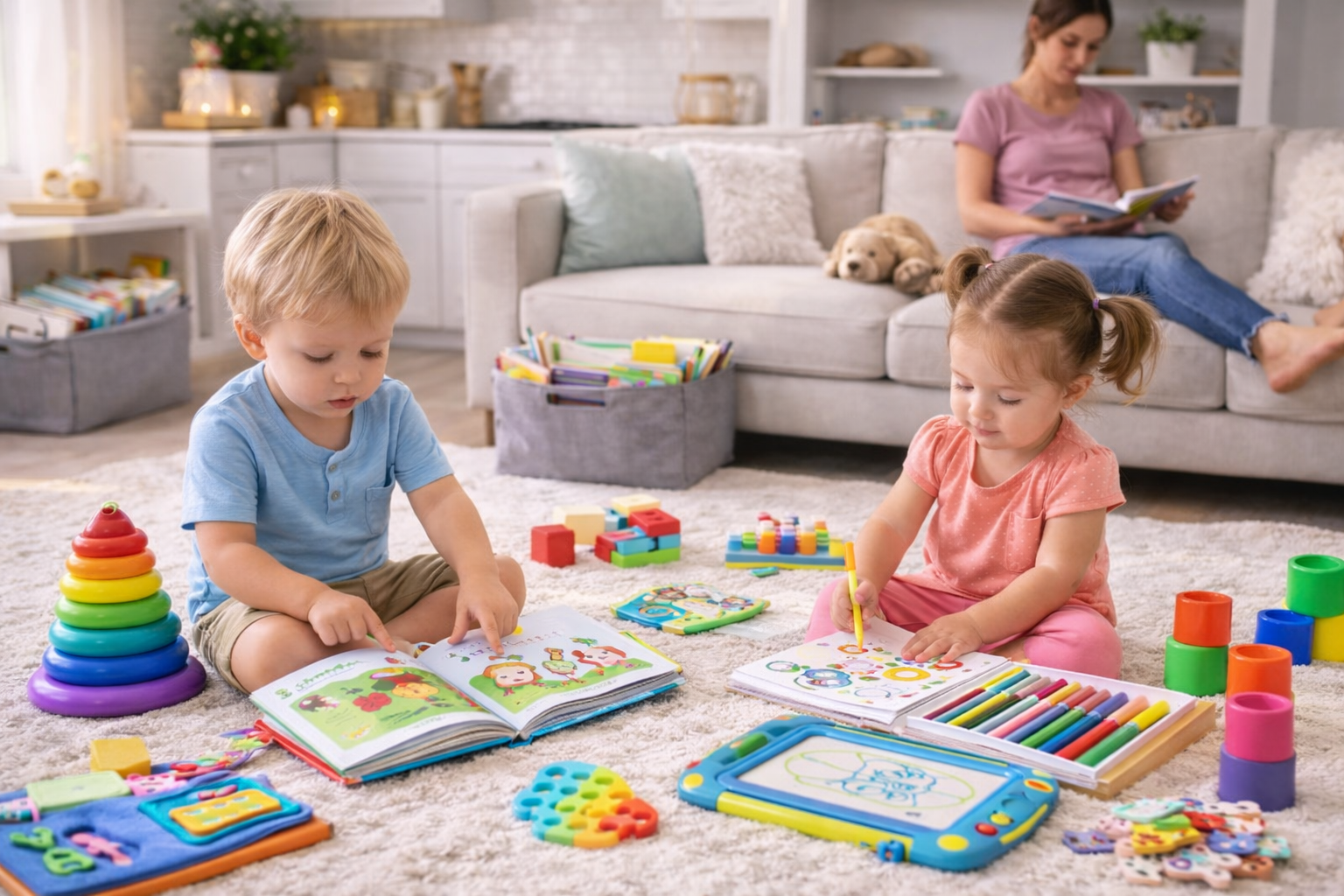
These are the toddler activity ideas I reach for when I need quiet, not a project. Stickers are especially good because they feel exciting but stay pretty contained. If stickers make you nervous, set a simple rule like “stickers stay on the paper” and hand them only a few at a time. Puzzles are another favorite, but only if they’re not too hard. If the puzzle is frustrating, quiet time turns into “MOMMMMM” every 30 seconds.
- Board books or a small stack of picture books (bonus if you rotate them)
- Sticker time: a sheet of stickers and a notebook or blank paper
- Chunky crayons with a coloring book or plain paper
- Puzzles with big pieces (start with ones they can actually finish)
- Felt pieces on felt board, or reusable “scene” stickers if you have them
- Soft toys or dolls for pretend play (doctor, bedtime, picnic, etc.)
Toddler independent play: how to teach it without tears (most days)
Independent play is a skill, not a personality trait. If your toddler struggles, it doesn’t mean you’re doing it wrong. It means they’re two (or three) and they like you. What helped us was making the first few quiet times very short and very predictable. I’d set a timer for 10 minutes, then come back and make a big deal out of how they stayed in the space. Over time, we stretched it. Also, I try not to sneak away. If I disappear, my toddler panics and spends the whole time hunting for me. A quick, confident goodbye works better than a stealth exit.
- Preview it: “After lunch, it’s quiet time. You can pick books or stickers.”
- Practice when you don’t desperately need it: start on an easier day
- Use a timer they can understand (even a simple kitchen timer works)
- Check in once: a quick “You’re doing great, I’ll be right back” helps
- End on time: consistency builds trust
When quiet time turns into door-opening, yelling, or “I need you” on repeat
Some days, quiet time is smooth. Other days, it’s like my toddler can smell the second I sit down. If they keep popping out, I do a calm, boring return. No big lecture, no big reaction. Just back to the space. If it’s truly a clingy day, I shorten it. Ten minutes of quiet play is still helpful, and it keeps the routine alive. Quiet time doesn’t have to be an hour to “count.” It just has to exist.
- Try a “two-minute reset”: bathroom, water, quick hug, then back in
- Offer a choice: “Do you want books or puzzles?” (not “Do you want quiet time?”)
- Use a simple boundary: “Quiet time means staying in your room.”
- Lower the bar on hard days: shorten the timer and call it a win
- Save high-energy toys for later: anything that encourages running usually backfires
A realistic quiet-time routine you can copy (and adjust)
This is basically our script. I keep my own expectations small too. If I try to deep clean the kitchen, I’m tense and listening for trouble. If I choose one doable thing, I can actually relax. Sometimes that “one thing” is sitting on the couch and staring at nothing. That counts. Quiet time is as much about regulating us as it is about keeping them busy.
- Lunch
- Potty/diaper, quick hand wash
- Pick 2 activities from the quiet bin
- Set a timer (start with 10 to 15 minutes)
- Mom does one simple thing: sit, fold laundry, answer one email, rest
- Timer goes off, reconnect with a snack or a cuddle
You've Got This, Mama
If quiet time activities for toddlers who won’t nap has felt heavier lately, you are not doing anything wrong.
Small, repeatable steps count, especially on the messy days when everything feels loud.
Tiny next step: Pick one 5-minute step from this post and do only that today.
FAQ
How long should quiet time be for a toddler who won’t nap?
Start with 10 to 15 minutes and build from there. Once your toddler understands the routine, many families land somewhere around 30 to 60 minutes, but it really depends on age and temperament. Consistency matters more than the exact length.
What if my toddler refuses to stay in their room?
Try a contained play area if a bedroom feels too isolating, and keep returning them calmly with as little drama as possible. A short timer helps at first. You can also do a quick check-in halfway through so they learn you come back when you say you will.
Are screens okay for quiet time?
That’s a personal call, and it can depend on the day. If you want screen-free quiet time, having a special quiet-time basket (books, stickers, puzzles) helps a lot. If you do use screens sometimes, it can help to keep it predictable so it doesn’t become the only option your toddler will accept.
My toddler just cries the whole time. Should I stop quiet time?
If it’s constant distress, scale it way back and make it feel safer. Sit nearby at first, shorten the timer, and choose comforting activities like books or stuffed animals. Quiet time should feel steady, not scary. If crying is intense or persistent, it’s okay to pause and try again later.
How do I keep quiet time from turning into a huge mess?
Limit the choices and avoid anything with a million pieces. Give a small set of activities (like 2 puzzles, a few books, and a sticker sheet). Rotating a few items every couple of days keeps it interesting without dumping out the whole toy box.
You are not doing this alone
If this helped, save it for later or share it with another tired mom who needs one easy win today.
Tired Mom Finds
Get practical, realistic routines for busy days
Weekly no-fluff tips for calmer mornings, simpler evenings, and less mental load.