2.5 vs 3.5 Gallon Car Trash Can: Which Fits Family Messes?
The best car trash can is not automatically the biggest one. Choose the smallest bin your family will actually reach, empty, and keep out of the way.
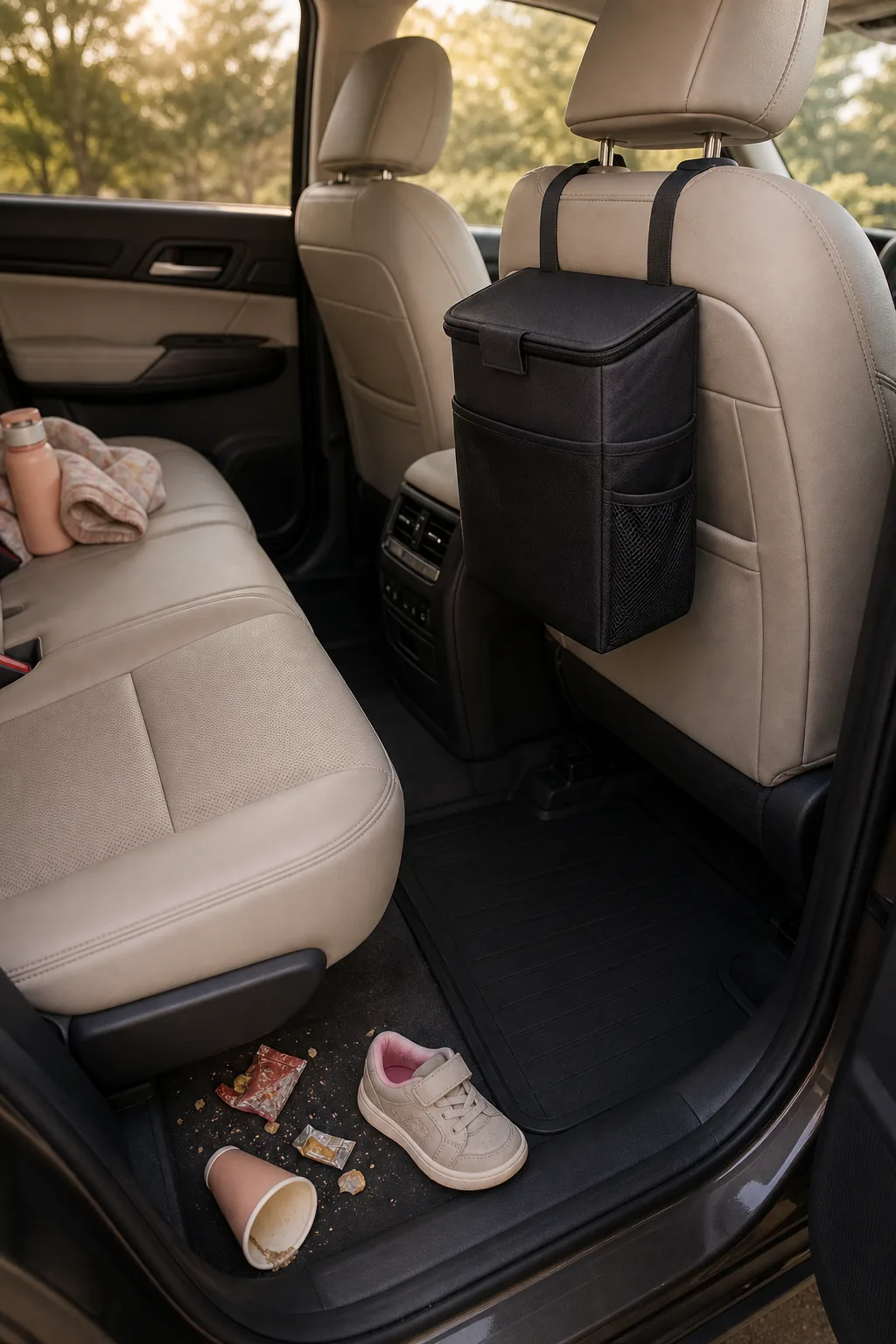
A car can look disorganized when the real problem is much narrower: snack wrappers have no reachable home. If trash is the first thing you remove during every reset, solve that flow before buying seatback pockets, trunk cubes, or a full-car system.
The two sizes below share the same basic idea—a hanging fabric bin with a lid, removable liner, exterior pockets, and multiple mounting positions—but the extra gallon changes where the bin fits and how long a family is tempted to leave trash inside. Capacity only helps when it does not crowd the passenger zone or postpone emptying wet waste.
The quick answer
Choose 2.5 gallons for everyday school runs, one or two children, smaller vehicles, or anyone willing to empty the bin every few days. Choose 3.5 gallons for longer road trips, larger households, rideshare or work vehicles, or a stable floorboard/trunk position with room for the larger footprint.
Skip both if passengers cannot reach the planned location safely, the bin interferes with seat movement or restraints, or the real clutter is reusable gear rather than trash.
Compare the two sizes before you buy
| Decision | 2.5 gallon | 3.5 gallon |
|---|---|---|
| Best routine | Daily driving with frequent emptying | Longer trips or higher trash volume |
| Space trade-off | Less likely to crowd a smaller backseat or console area | Needs more clearance and a more stable mounting position |
| Emptying behavior | Fills sooner, which encourages a faster reset | Fewer dry-trash emptying stops, but easier to leave waste too long |
| Manufacturer-listed structure | Oxford fabric, flip-top lid, removable liner, pockets, optional bag hooks | Reinforced sides, bottom, and lid plus removable liner, pockets, optional bag hooks |
| Use it for | Wrappers, tissues, receipts, and other light everyday trash | The same waste at greater volume—not heavy, sharp, hot, hazardous, or uncontained liquid waste |
Two current options, matched to different routines
1. Lusso Gear 2.5-gallon car trash can
Best fit: The floor or seat pocket collects a modest stream of wrappers and tissues, the car is compact or midsize, and an adult can make emptying the bin part of the weekly reset.
Lusso Gear currently lists waterproof Oxford fabric, a flip-top lid, a removable leakproof liner, optional disposable-bag hooks, two side mesh pockets, and a front zip pocket. The official product page showed 338 reviews and a 4.6 rating when this guide was updated; ratings can change.
- Why smaller can be better: it takes less passenger space and makes old trash harder to ignore.
- Check before buying: measure the planned hanging or floor position with seats in their real driving positions.
- Main trade-off: a road-trip day or larger family may fill it quickly.
This article contains paid links. We may earn a commission if you buy through them, at no extra cost to you.
2. Lusso Gear 3.5-gallon XL car trash can
Best fit: The family produces more dry snack trash, drives longer stretches, or has a van, SUV, work vehicle, or stable floor location that can accept the larger bin without blocking movement.
Lusso Gear currently lists reinforced walls, bottom, and lid; waterproof Oxford fabric; a flip-top lid; a removable leakproof liner; optional bag hooks; exterior pockets; an adjustable strap; and multiple install positions. Its official page showed 32 reviews and a 4.7 rating when updated.
- Why larger can be better: fewer stops to empty light dry trash during a trip.
- Check before buying: confirm the bin stays stable and reachable without touching pedals, airbags, controls, restraints, or a passenger walkway.
- Main trade-off: the extra gallon takes space and can encourage delayed cleanup.
Run this parked-car fit test first
- Find the actual trash landing zone. For three days, notice whether wrappers collect near the second row, front console, door pocket, or trunk.
- Mock up the size. Use a paper grocery bag or cardboard box close to the planned capacity. Put it in the proposed location while the car is parked.
- Move every seat. Slide, recline, fold, and access child restraints as normal. The mockup should not pinch straps or block controls.
- Test adult reach. The driver should never twist or reach for the bin while moving. Backseat children should not need to unbuckle or lean out of position.
- Test the exit path. Every passenger needs a clear footwell and door route.
- Name the emptying trigger. Choose a repeatable moment: fuel stop, Sunday reset, or after every road-trip day.
Where each size makes the most sense
Behind a front passenger seat
This can work when the strap is secure, the bin does not swing into legs, and passengers can reach it without leaving a safe seated position. Check the vehicle and child-restraint manuals; do not route straps around safety equipment.
On the rear floorboard
A reinforced larger bin may be more stable here, but only if it cannot slide into a footwell, block a seat track, or become a loose object during braking. The 2.5-gallon size is usually easier to fit in a compact car.
Around the center console
This is useful only when the manufacturer-supported attachment leaves every control, charging port, air vent, and front-seat safety area clear. Never place a bin where it can reach the driver's pedals.
In the trunk or cargo area
The 3.5-gallon size fits higher-volume road-trip cleanup, but it still needs restraint. A cargo-area bin is less helpful for wrappers if passengers cannot reach it during normal stops, so pair it with a small temporary bag that an adult moves only when parked.
Do not use capacity as spill insurance
The manufacturer describes both compared liners as leakproof. That does not make the whole setup impossible to spill. A loose lid, damaged liner, tilted bin, sharp object, or unsealed drink can still create a mess. Close liquids, bag wet waste separately, and remove food or drink trash promptly—especially in warm weather.
- Do not store batteries, hot items, sharp objects, chemicals, medication, diapers for extended periods, or anything hazardous in the car bin.
- Do not let the bin become a heavy loose object.
- Keep exterior pockets light; they are not a safe home for hard projectiles.
- Inspect the strap, liner, lid, and mounting position during each emptying reset.
The 10-minute one-zone reset
- Remove every cup, food item, and wrapper from the problem zone.
- Wipe the floor or seat surface while it is empty.
- Install the bin according to the current product and vehicle instructions.
- Add one liner and no more than two light cleanup items to the exterior pockets.
- Tell passengers what belongs in the bin—and what comes inside the house.
- Put the emptying trigger on an existing routine instead of creating a new chore.
If the zone is still messy after one week, diagnose the misses. Trash beside the bin usually means poor reach or an opening that is awkward. Toys and bottles beside it mean the household needs a gear container, not a larger trash can.
Our honest decision
The 2.5-gallon size is the better default for most everyday family cars because it uses less space and creates a natural emptying reminder. Choose 3.5 gallons only when real trash volume, trip length, and measured clearance justify the larger footprint.
Do not buy either one to solve every kind of car clutter. A trash bin should receive trash. Reusable toys, emergency clothes, school papers, and water bottles need separate exit routines or one removable caddy.
Research notes
This guide was rebuilt on July 19, 2026 from current first-party Lusso Gear information and current Amazon destinations. Tired Mom Finds has not personally tested these models. Manufacturer pages establish listed capacity, materials, components, mounting options, and on-site review counts—not universal fit or spill prevention in every vehicle.
FAQ
Is a 2.5-gallon car trash can big enough for a family?
It can be when the bin handles daily wrappers, tissues, and light snack trash and an adult empties it every few days. A larger household or longer road-trip interval may make a 3.5-gallon size more practical.
Where should a hanging car trash can go?
Use a manufacturer-supported position that does not obstruct pedals, airbags, seat controls, passenger movement, or child-restraint use. Test reach and stability while the vehicle is parked before driving.
Can a car trash can hold wet trash?
The compared manufacturer lists removable leakproof liners, but liquids can still leak through an open lid, damaged liner, or poor installation. Bag wet waste separately and empty it promptly rather than treating the bin as spill insurance.
Choose the emptying rhythm before the size
Save this guide, then watch one real week of wrappers before choosing the smaller daily-reset bin or larger trip bin.
Tired Mom Finds
Get practical, realistic routines for busy days
Weekly no-fluff tips for calmer mornings, simpler evenings, and less mental load.